
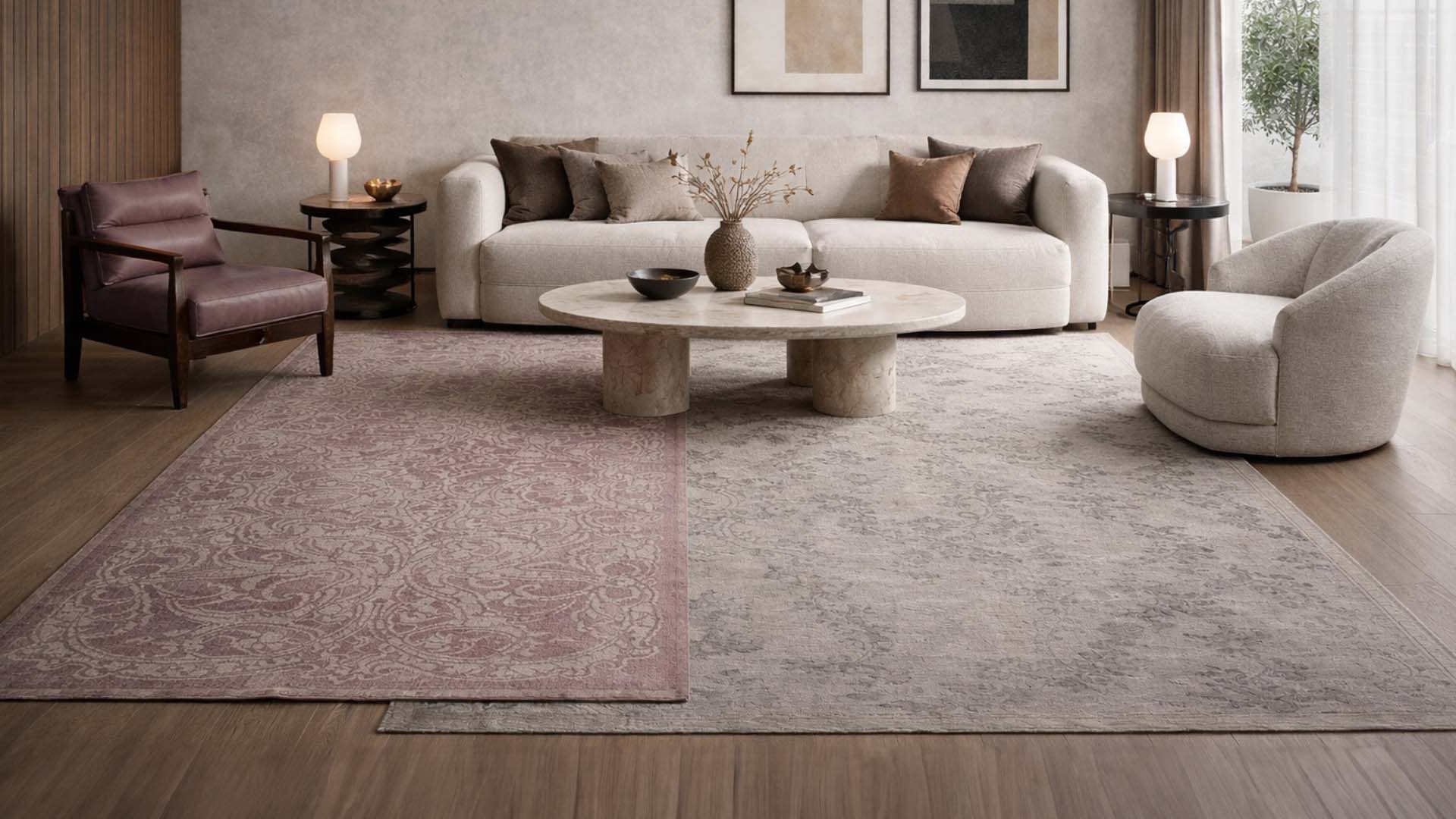
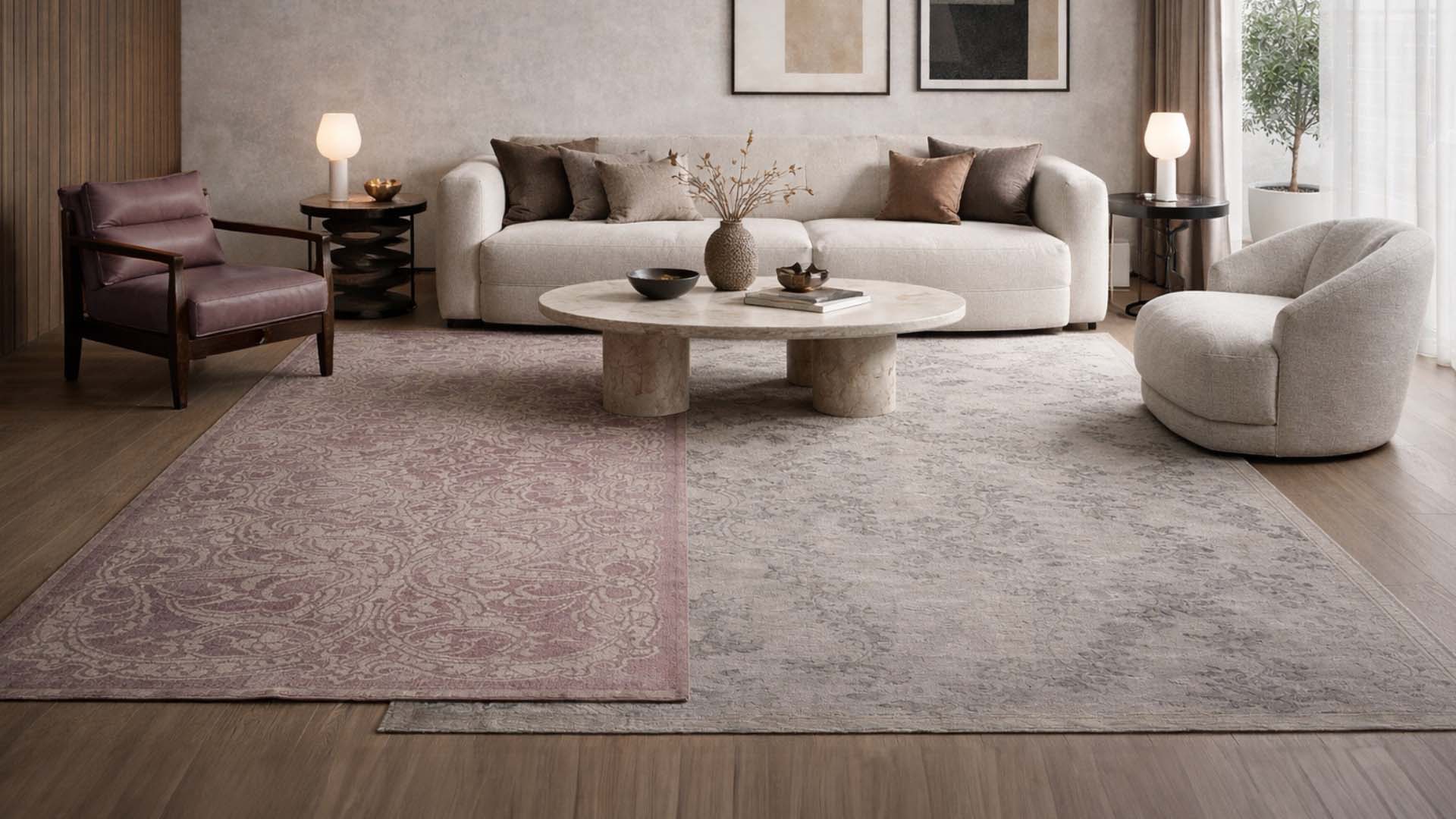
Pairing two rugs is the new choice in interior design
For a long time, placing two rugs in the same room was perceived as risky, a possible mistake, excessive, or discordant. In today's interior design language, however, this is not a random choice, quite the contrary. It says a lot about a position, a vision, a very specific stylistic intention on the part of the architect, designer, or those who will live in the house.
When approached with method and design sensitivity, the use of two rugs in the same space is not only legitimate but becomes a refined compositional act, capable of giving depth, rhythm, and identity to the space.
It is not a question of “adding,” but of articulating. Of using the rug as a tool for interpreting the environment, as an element capable of defining areas and visual paths. For the designer, the rug ceases to be a complement and becomes a true architectural surface.
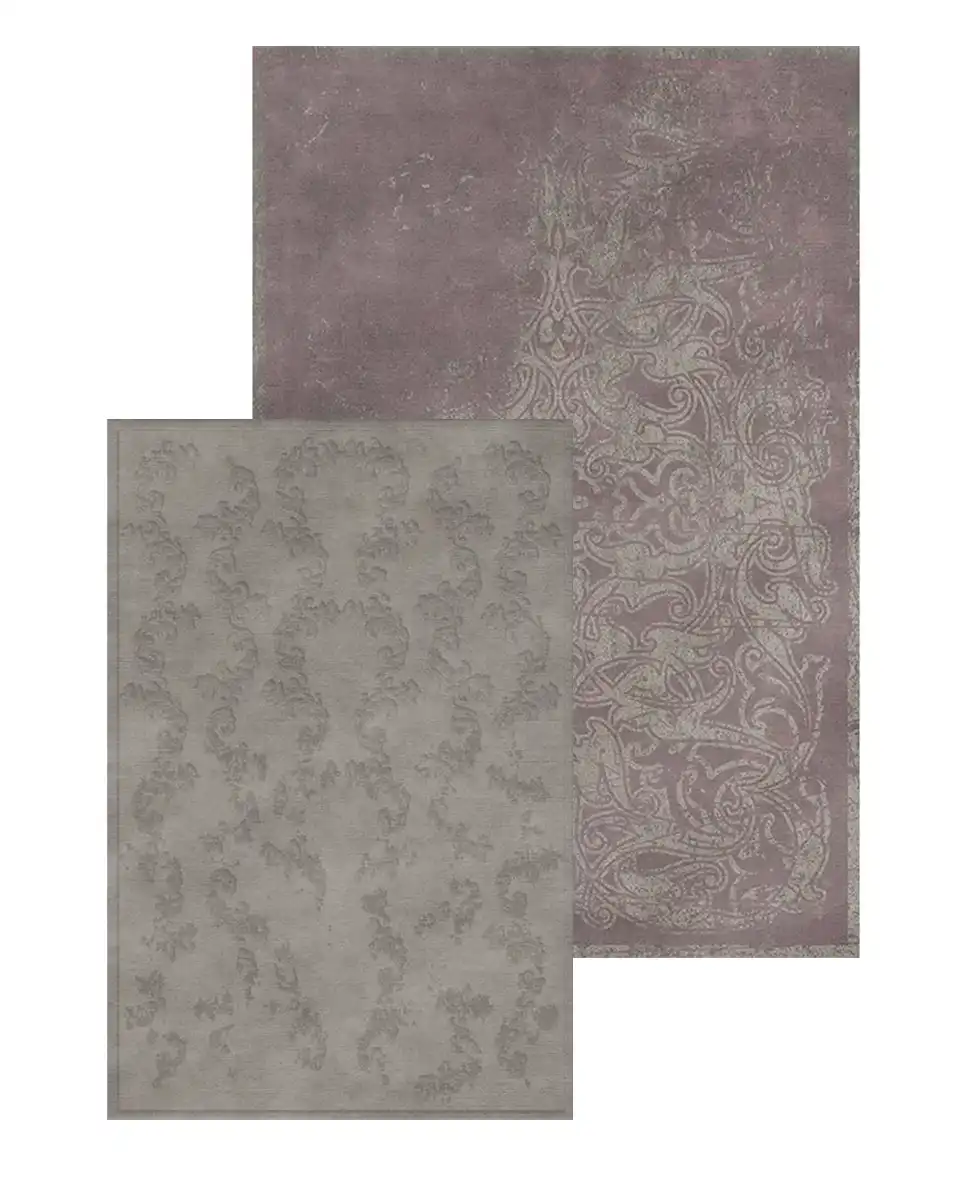
Why combine two rugs? Let's talk about layering, rhythm, and design.
In contemporary spaces, which are often large, fluid, and without clear boundaries, rugs are becoming increasingly important. Placing two rugs side by side means working in layers, as in a horizontal architectural section.
Two coordinated rugs placed close together or overlapping allow you to:
• introduce rhythm: repetition or variation accompanies the gaze and movement;
• add depth: the floor ceases to be a uniform, flat surface and becomes dynamic;
• reinforce the identity of the home: especially in large rooms, a single rug risks looking isolated, while a pair gives strength;
For the end customer, the result is a richer, more legible, more “thought-out” space. For the designer, it is an opportunity to influence the atmosphere of the room without resorting to invasive elements.
Two identical carpets: when does repetition become order?
Repetition is one of the fundamental rules of architectural design. Two coordinated or identical rugs, placed within the same room or in adjoining spaces, can create a strong sense of continuity and visual discipline.
This choice works particularly well when:
• the space is very large or highly linear;
• you want to avoid excessive fragmentation;
• the project requires sobriety, balance, and control.
Duplicating the same rug is never trivial when placed in a coherent context. On the contrary, it becomes a rigorous move, a choice that speaks of moderation, silence, and an aesthetic that does not want to shout but rather accompany the eye.
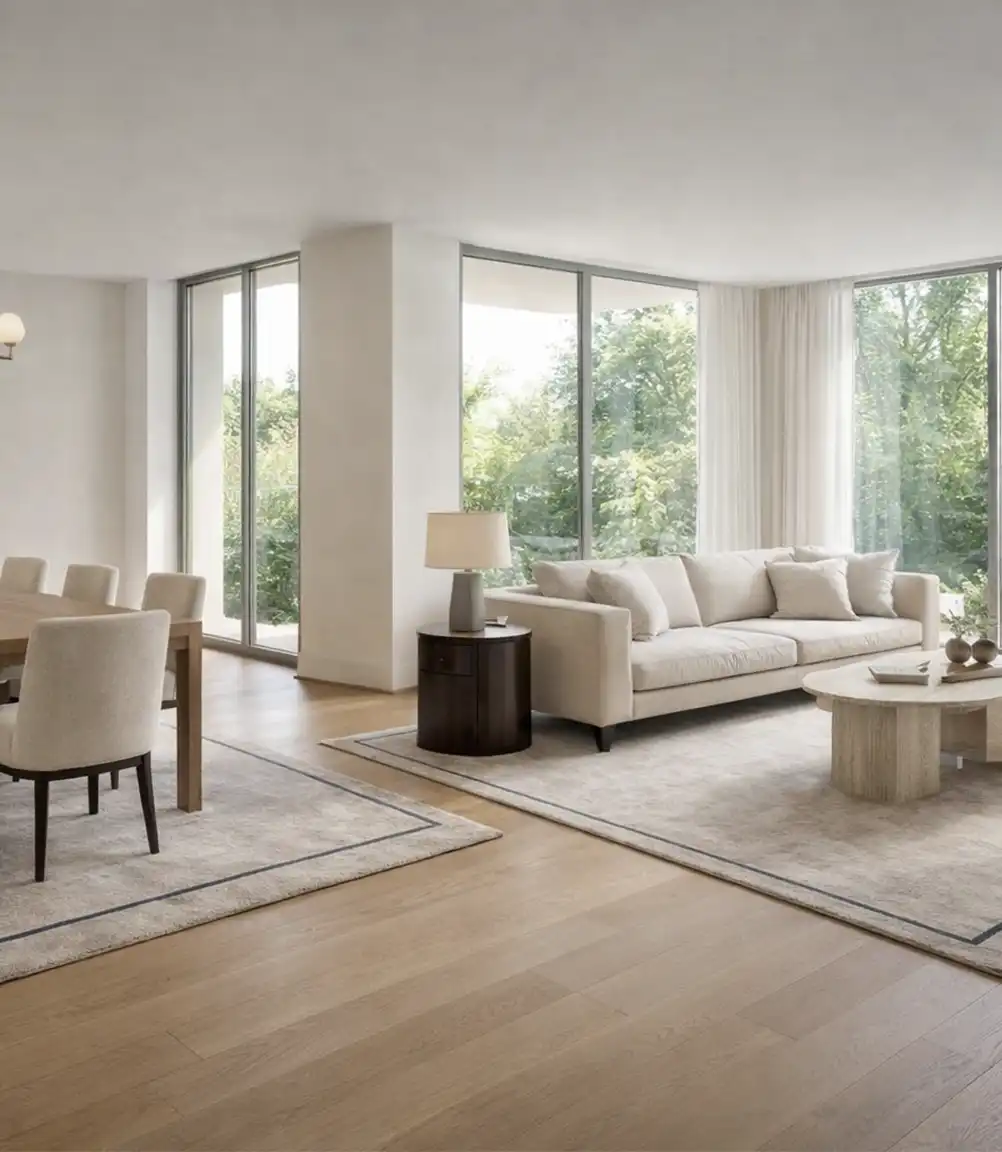
Some design scenarios: here are some concrete examples of coordinated rugs
Living and dining areas: choose rugs for open spaces
In residential open spaces, rugs are often the only element capable of distinguishing areas without interrupting the continuity of the space with walls or furniture.
A rug in the living area anchors the sofa, defines the perimeter of conversation, and creates a focal point. A second rug under the dining table introduces a pause, a change of pace, a new function.
Whether they are coordinated in style or identical, rugs for open spaces together create a visual dialogue because they are autonomous and coexist at the same time, in the same space.
Bedroom: large and small rugs are best
In the bedroom, the use of two or more large and small rugs takes on an almost sartorial character. A large rug under the bed enriches its centrality, while one or two smaller side runners accompany the daily gesture of getting up, introducing comfort and continuity.
Here, the choice of materials and textures becomes fundamental: tactile consistency is as important as visual consistency. It is a choice that must be perceived with the body before it is perceived with the eyes.
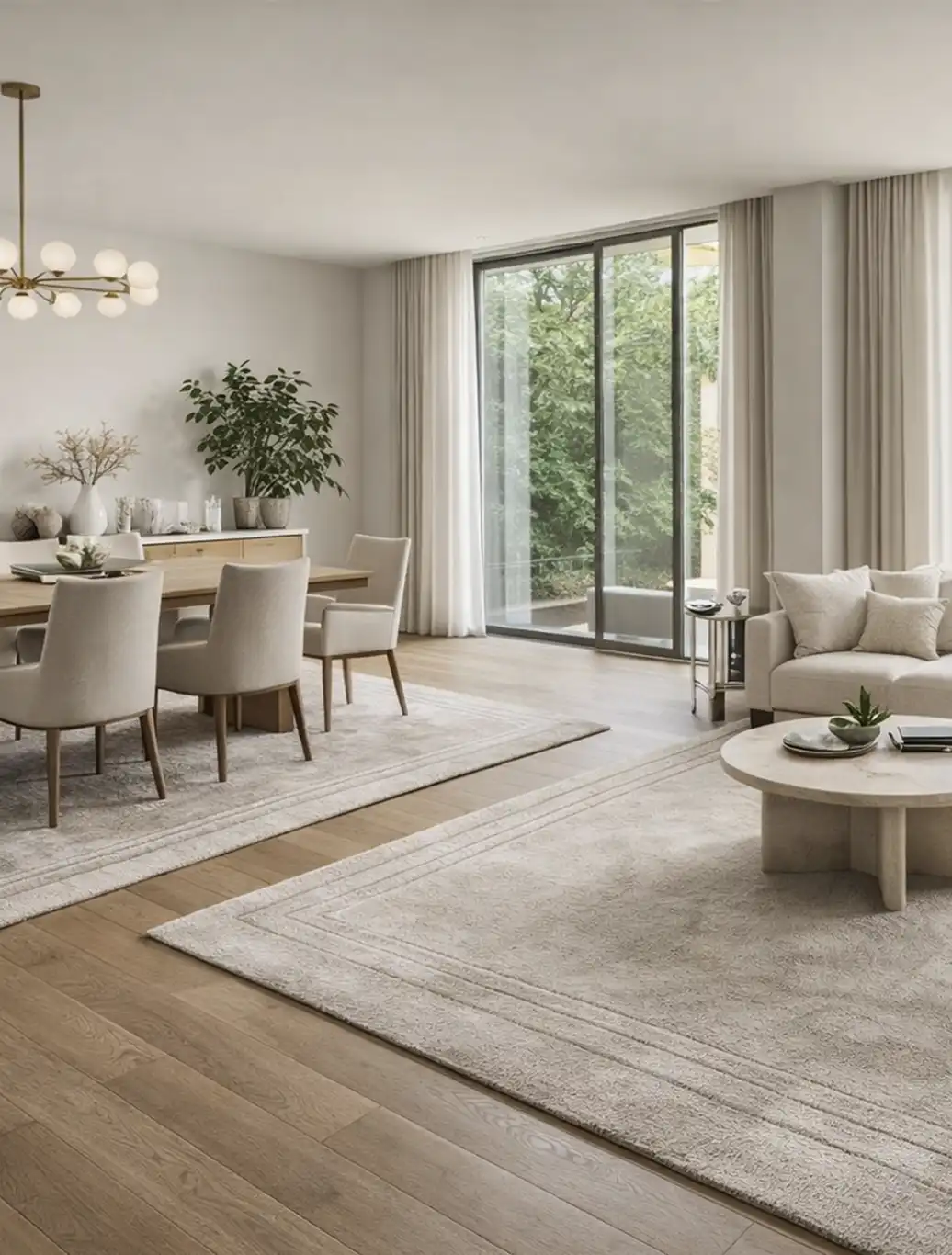
Unwritten (but fundamental) rules for combining two rugs in large rooms
Pairing two rugs for large rooms requires attention, sensitivity, and control. Follow these three principles to help you maintain balance when designing your interior:
1. Same pattern, different sizes
Using the same rug pattern in different sizes creates a clear connection without falling into mechanical repetition. This solution is particularly effective in large rooms, where the variation in size avoids the “infinite pattern” effect.
2. Same color and same material
Uniformity in color and material is a very elegant choice. Two rugs of the same color and material, even if different in size or shape, speak the same language and reinforce the cohesion of the design.
3. Respect breathing space
There must be a pause between one rug and another. Empty space is part of the composition. A margin of floor left free helps to read each element and avoid random overlaps.
What are the best shapes and sizes for combining two rugs? Let's go beyond the usual rectangle.
While rectangles remain a reassuring shape for combining two rugs, today's interior design often requires us to go beyond our imagination. Irregular shapes open up new narrative and compositional possibilities, especially when working with multiple rugs in the same space.
The Imago Formenuances collection by Platinum Custom Rugs was born precisely from this need: to go beyond the traditional pattern and transform the rug into a free form, capable of dialoguing with architecture, furnishings, and people.
Combining two irregularly shaped rugs allows you to create visual paths, follow the lines of the environment instead of imposing a grid, and introduce an almost pictorial dimension to the project.
In this sense, the rug becomes a gesture, a sign, a material. No longer just a surface, but a presence. The irregular shapes of Imago Formenuances have an expressive potential that takes the design beyond the ordinary and surprises.
Read this article and find out how to combine two irregularly shaped rugs.
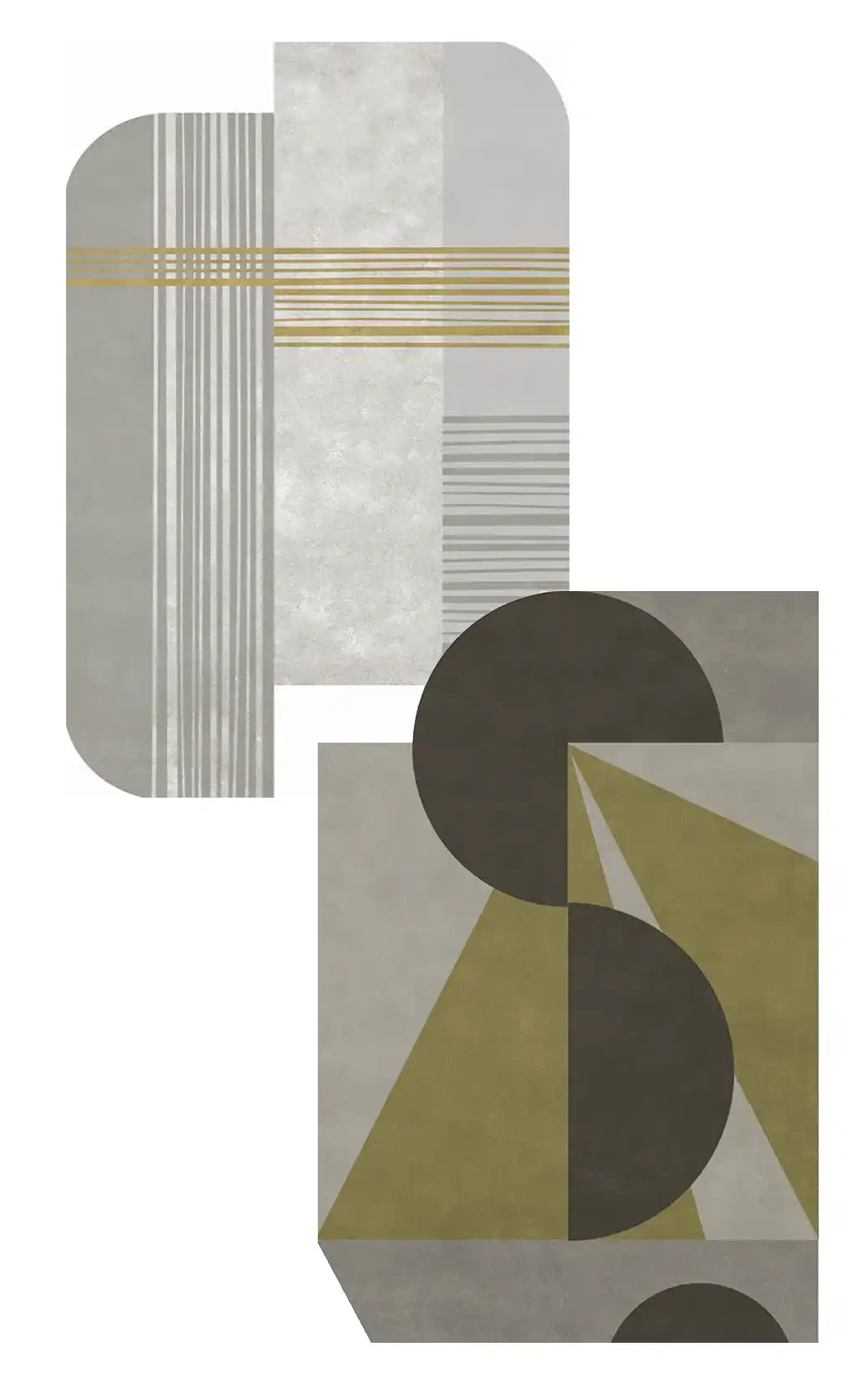
The value of custom-made luxury carpets: designing without compromise
Placing two rugs side by side in the same room highlights a limitation of standard products: catalog sizes rarely truly meet the needs of a complex project.
Platinum Custom Rugs' made-to-measure rugs, on the other hand, allow you to:
• precisely calibrate proportions and distances;
• harmonize patterns, colors, and materials;
• adapt shapes to real, rather than ideal, spaces.
For the designer, this means having total control over the composition. For the customer, it means living in a space that feels natural, fluid, and truly their own.
Make a choice that speaks to your ideas
Placing two rugs side by side in the same room is not a mistake to be justified, but a choice to be governed. It is a gesture that requires awareness, design culture, and attention to detail.
When the rug is conceived as an integral part of interior architecture, and not as a simple accessory, it becomes a powerful tool capable of giving order, rhythm, and identity. Capable of conveying a vision.
For architects and designers, it is an invitation to consider the rug beyond its role as a complement or accessory, but as a living design material of the highest order. The carpet is a surface on which to build beauty, balance, and silence. And sometimes, it is better to have two.